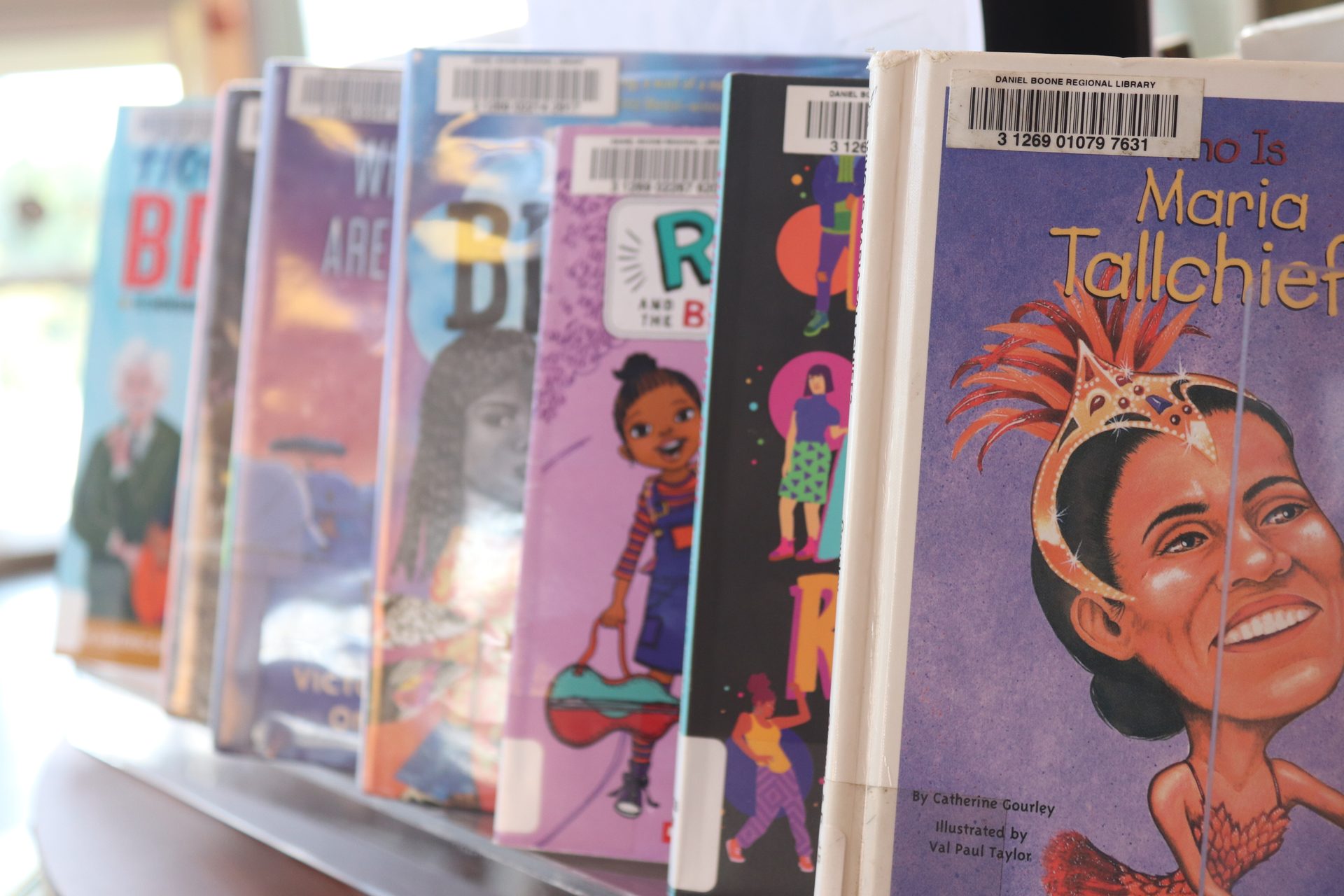
Children's books arranged on a banned and challenged books display at the Columbia Public Library Sept. 15 in Columbia.

Book banning on the rise

In the weeks before National Banned Book Week (Sept. 19- 24), Missouri Legislature has made some recent moves to get more books banned in school libraries. Here's a look at book banning.


Reporting, design and photos by Abigail White

What is book banning?

Book banning is just as it sounds: removing a book from school curriculum and/or public libraries as a result of objections to its content. Books start off by being challenged — a person or group attempts to remove or restrict access to a specific book or books on a specific topic. According to the American Library Association, the majority of book challenges are unsuccessful, though book banning is still on the rise in the U.S.


Book bans are often motivated by desires to protect others, often children, from topics considered “inappropriate,” such as material considered sexually explicit, offensive language, or materials termed “unsuited to any age group” according to ALA.


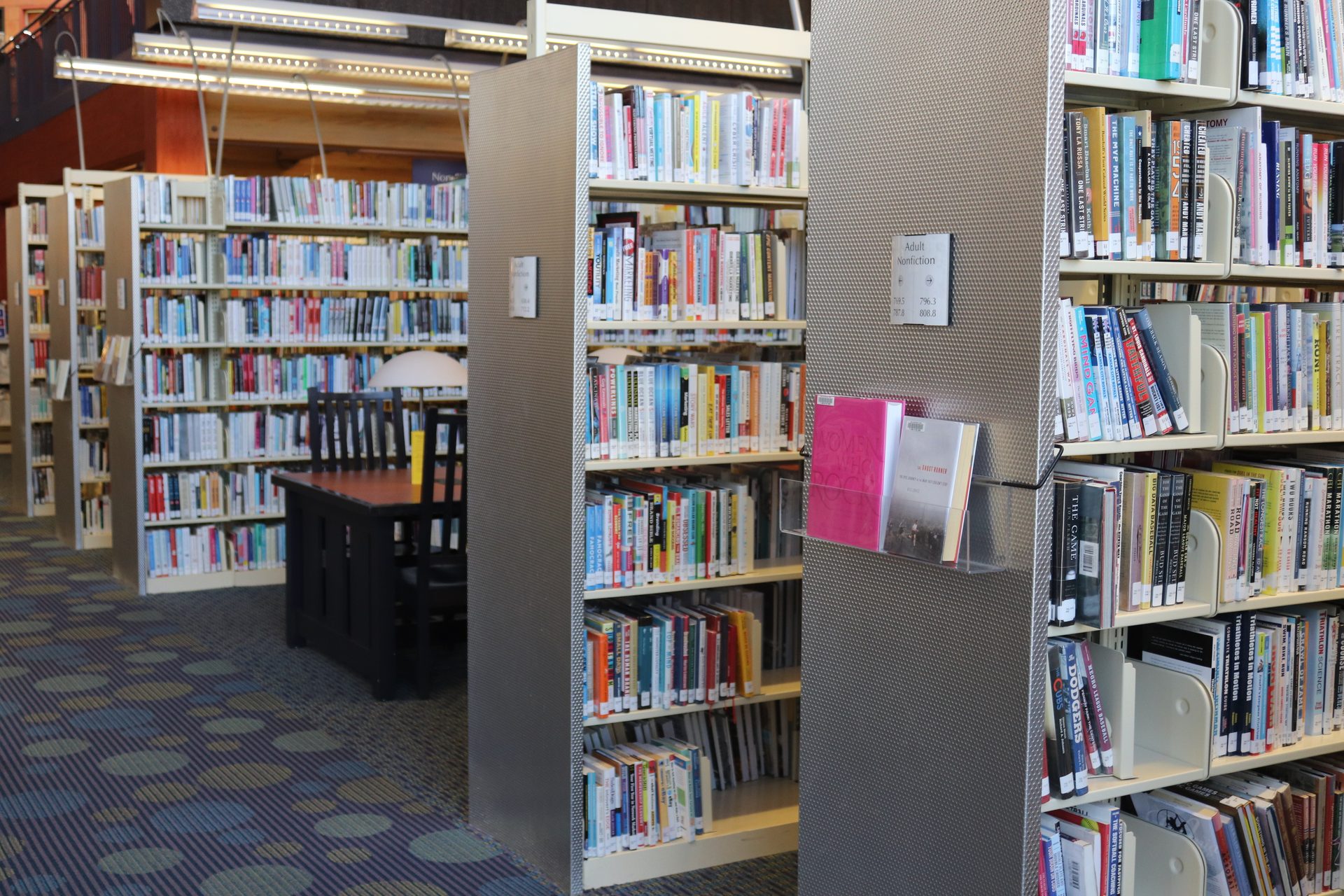
Adult nonfiction shelves and study space Sept. 15 at the Columbia Public Library in Columbia.

Challenged

The American Library Association defines a book challenge as an attempt to remove or restrict the materials in schools or libraries based on objections from a person or group.

Banned

According to the American Library Association, a book ban means the books have been removed from schools or libraries. A ban follows the review of a challenge by a designated review board.

126

The American Library Association reported 156 challenges issued to libraries, schools and universities targeting 273 titles.

In the year 2020

700

In the year 2021

The American Library Association reported 729 challenges issued to libraries, schools and universities targeting 1,597 titles.

Those numbers show an over 367% increase in book challenges issued.

367%

250

Beginning of 2022

274 books were challenged or banned in schools between January and March of 2022, according to PEN America’s Index of School Book Bans.

0

In Missouri

15 new books were challenged in Missouri schools between Fall 2021 and March 2022, according to PEN America’s Index of School Book Bans.

2022 is on track to continue the upward trend.

HAPPENING NOW

On Aug. 28, a new law related to book banning went into effect in the state of Missouri. The new law makes it a Class A misdemeanor for school officials, public or private, to provide certain visually and sexually “explicit” books and materials in school libraries.

The new law is an amendment to Senate Bill 775, which aims to strengthen protections against sexual exploitation of minors and protect the identity of victims of sexual assault and domestic violence in court proceedings.


Under the amendment, schools found to have books deemed visually and sexually “explicit” would face a year in jail or a $2,000 fine.

The Missouri Library Association said in a statement that “Obscenity laws like that put into place by SB 775 are simply a means to block access to truth. Visual art, like the written word, is a means by which society views itself through the lens of the author or artist. In this case, it is obvious that certain perspectives are being censored as a means to suppress the vitality and freedom of the reader’s intellectual life.”

U.S. Top 10 Most Challenged Books

Every year, the Office for Intellectual Freedom compiles a list of the Top 10 Most Challenged Books based on information from media stories and voluntary reports sent to OIF from communities across the U.S. Below are the most common books challenged among reported attempts to ban books. The information below was published by the American Library Association.
Gender Queer
by Maia Kobabe; Cover Published by Oni Press
Reasons: Banned, challenged, and restricted for LGBTQIA+ content, and was considered to have sexually explicit images
Where to read →
Lawn Boy
by Jonathan Evison; Cover Published by Wheeler Publishing Large Print
Reasons: Banned and challenged for LGBTQIA+ content and was considered to be sexually explicit
Where to read →
All Boys Aren’t Blue
by George M. Johnson; Cover Published by Farrar, Straus and Giroux (BYR)
Reasons: Banned and challenged for LGBTQIA+ content, profanity, and was considered to be sexually explicit
Where to read →
Out of Darkness
by Ashley Hope Perez; Cover Published by Carolrhoda Lab ®
Reasons: Banned, challenged, and restricted for depictions of abuse and was considered to be sexually explicit
Where to read →
The Hate U Give
by Angie Thomas; Cover Published by Balzer + Bray
Reasons: Banned and challenged for profanity, violence, and was thought to promote an anti-police message and indoctrination of a social agenda
Where to read →
The Absolutely True Story of a Part-Time Indian
by Sherman Alexie; Cover Published by Perfection Learning
Reasons: Banned and challenged for profanity, sexual references and use of a derogatory term
Where to read →
Me and Earl and the Dying Girl
by Jesse Andrews; Cover Published by Amulet Books
Reasons: Banned and challenged because it was considered sexually explicit and degrading to women
Where to read →
The Bluest Eye
by Toni Morrison; Cover Published by Vintage International
Reasons: Banned and challenged because it depicts child sexual abuse and was considered sexually explicit
Where to read →
This Book is Gay
by Juno Dawson; Cover Published by by Hot Key Books
Reasons: Banned, challenged, relocated, and restricted for providing sexual education and LGBTQIA+ content.
Where to read →
Beyond Magenta
by Susan Kuklin; Cover Published by by Candlewick Press
Reasons: Banned and challenged for LGBTQIA+ content and was considered to be sexually explicit
Where to read →

More Info

What states have banned the most books?
During a nine-month period from July 1, 2021, to March 31, Texas had the most bans (713), followed by Pennsylvania (456), Florida (204) and Oklahoma (43), according to an April report from PEN America.
Read more.
What is the history of book banning?
This article from National Geographic chronicles the history of book bans in the U.S. and changing trends of what gets banned.
Read more.
What can I do if a book I want to read has been banned or challenged?
If you would like to read a specific book you can check with your local libraries and book stores, as well as online retailers. You could also fight against the book banning. The article below lists five ways you can support the right to read.
Read more.
What does book banning look like internationally?
Book banning and censorship are problems outside of the U.S. as well. Canada, China, Hungary and Russia are among countries that have recently been in the news for cases of book bans and censorship.
Read more.
Bookcase, Shelf, Publication, Shelving, Building

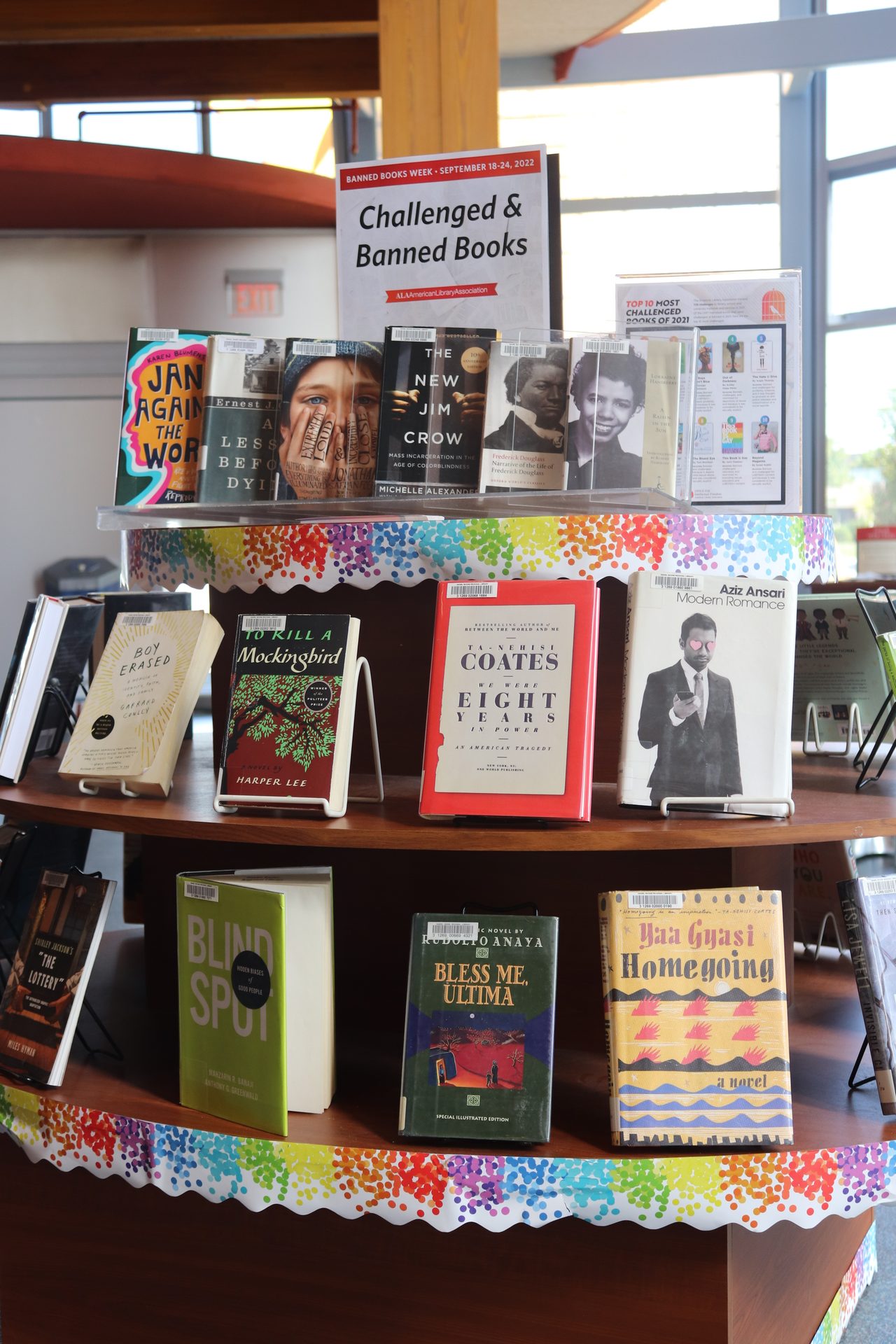
Challenged and Banned Books display at the Columbia Public Library Sept. 15 in Columbia.